A Nation in Superposition: America's Political Future at the Crossroads
Politics is rarely determined by a single election. It is the product of interconnected forces, competing interests, institutional structures, and decisions whose consequences often extend far beyond the ballot box.
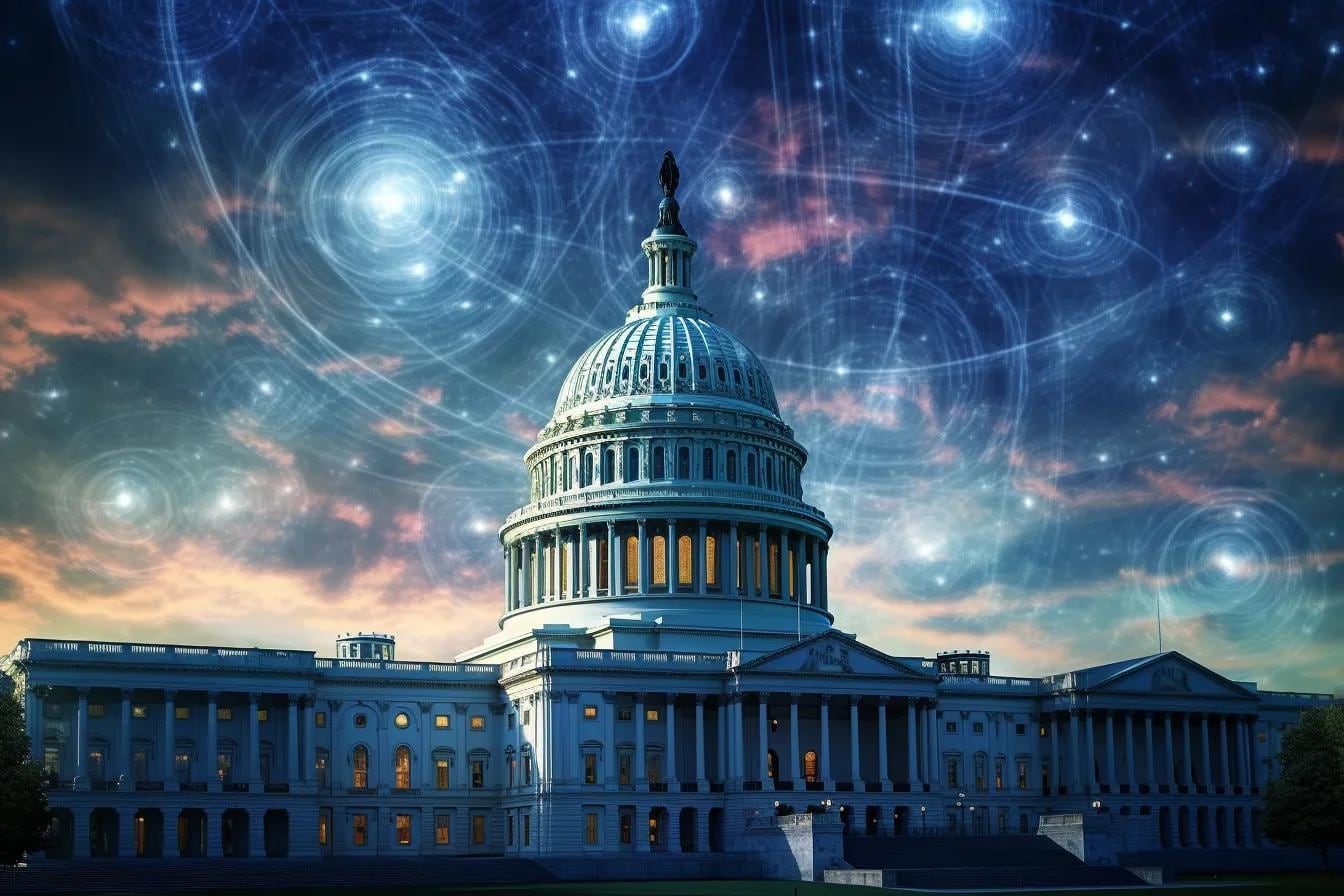
Tomorrow, on November 3, Americans return to the ballot box in a midterm election that could redefine the balance of political power in Washington. At stake are all 435 seats in the House of Representatives, 35 Senate seats, and 39 governorships. Yet, beyond the competition between Republicans and Democrats lies a more fundamental question: what happens when the distribution of political power begins to shift? At the Quantum Political Institute (QPI), we approach this question through a different analytical lens: the intersection of political science, systems thinking, and the principles of quantum theory. Our interest is not simply in identifying political winners and losers, but in understanding the underlying forces that shape political outcomes and the systems that emerge from them.
The politics of uncertainty
In quantum mechanics, a system can exist in multiple possible states until an interaction produces an observable outcome. American politics offers an interesting parallel. Before election results are established, multiple political configurations remain possible. Republicans could retain control of Congress, Democrats could gain control of one or both chambers, or a divided Congress could emerge. Each configuration carries different institutional consequences. A Democratic-controlled House, for example, could introduce greater congressional oversight of the Trump administration, reshape committee leadership, and intensify investigations. Not a definite result but this can cap Trump’s power over the Iranian war, his support for Ukraine, and Tariff Wars he has launched to almost every country on the planet. A change in Senate control could influence judicial appointments, executive nominations, and legislative negotiations. Conversely, continued Republican control of both chambers would provide the administration with greater congressional alignment. However, even a change in congressional majorities would not automatically translate into a complete change in national policy. Presidential veto powers, Senate procedures, institutional constraints, and competing political interests would continue to shape what the Trump Administration can accomplish. The election, therefore, is not simply a measurement of party popularity. It is an observation of a much larger political system under pressure.
Political entanglement: America and the world
One of the most important principles of quantum theory is entanglement: the idea that separate components of a system can remain deeply interconnected. American politics operates through comparable interdependencies. Domestic economic conditions, international conflicts, immigration, trade policy, technological competition, and foreign relations do not exist in isolation. The outcome of this election could influence America's approach to international alliances, its position in global trade, its relationship with China, and its engagement in ongoing international conflicts. For international partners, investors, and governments, changes in congressional control may alter expectations about the consistency and direction of American policy. This is particularly important because the United States occupies a central position in the global political and economic system. A shift in its domestic political balance can produce consequences well beyond its borders.
Beyond the ballot: What Should we be watching?
Three developments deserve particular attention.
First, the distribution of congressional power will reveal whether voters are providing the governing administration with continued legislative alignment or introducing greater institutional resistance.
Second, the relationship between economic conditions and political accountability will offer insight into how Americans evaluate inflation, living costs, employment, healthcare, and the broader direction of the economy.
Third, the strength of democratic institutions will be tested through the administration of elections, the acceptance of certified results, and the ability of political institutions to manage disagreement peacefully. These developments matter regardless of which party secures a majority.
Power Is a system, not a moment
The 2026 American midterms should not be understood as an isolated political event. They are a snapshot of an evolving system in which public opinion, institutional authority, economic realities, and international pressures continuously interact. The deeper significance of this election may not lie exclusively in who wins Congress, but in what the results reveal about the direction of American political institutions and the forces shaping their future.
Related reading
The Entangled Neighbours: What a Democratic Sweep Means for Canada and What It Doesn't
The 2025 Canadian Election Study shows which Canadian expectations the new signal can move, and which it cannot.
Discussion 0